FY 2024-25
Revenue
Not published
Expenses
Not published
Reserve
$8,364,353
shape what matters
The rooms your clubs meet in. Gym access. The food pantry. Study rooms. Places to nap.
You already pay for the U-SU: $137.25 a semester, unchanged since 2007.
However, costs have risen for nineteen years while enrollment fell.
By FY 2030-31, the reserves covering the deficit are gone, leaving 40% less for everything else.
The proposal is $90 more a semester: $50 for the building & $40 for improvements.
$137.25
Per semester today
+$90.00
Proposed increase
$227.25
Per semester after
Why it matters
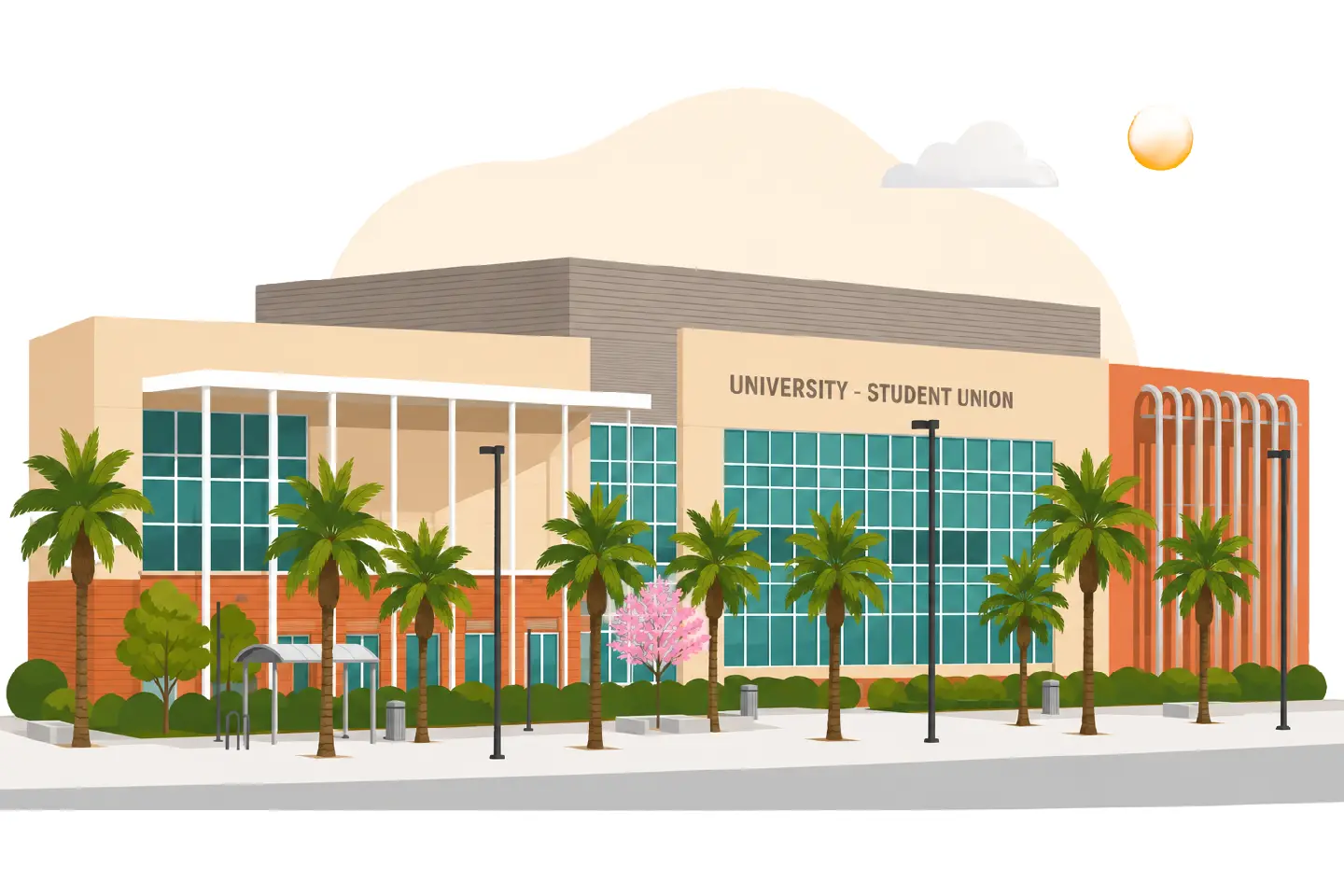
Most Cal State LA students commute. The U-SU is the part of campus that is useful whether or not you have class the next hour and it's already included in what you pay.
01
A commuter's day has holes in it. This is where you sit them out: lounges, study rooms, nap pods, microwaves, outlets, and a chair that isn't the front seat of your car.
02
The fitness center, the food pantry and everyday essentials are covered by the fee you already pay. No membership, no per-visit charge, no sign-up.
03
Between 90 and 100 students work here4 alongside 29 full-time staff—the largest student employer on campus, with schedules built around class times.
And if you're one of the students who never comes in, someone you know does. The food pantry, the sensory room, a safe place for commuters to hang out at night, and the cultural graduation celebrations are essentials to students who don't advertise that they need them.
Event programming run by students, for students.
Quiet floors, group rooms, nap pods and somewhere to be between a 10 AM and a 2 PM class.
The fitness center, the Game Room and the GENE program included; no membership required.
The APISRC, CLSRC, GSRC and PASRC: staffed centers, open doors, and Cultural Grads.
U-Krew employment, the Board of Directors, and paid roles that fit around a class schedule.
Food pantry, microwaves, lockers and the small things that make a long commuter day workable.
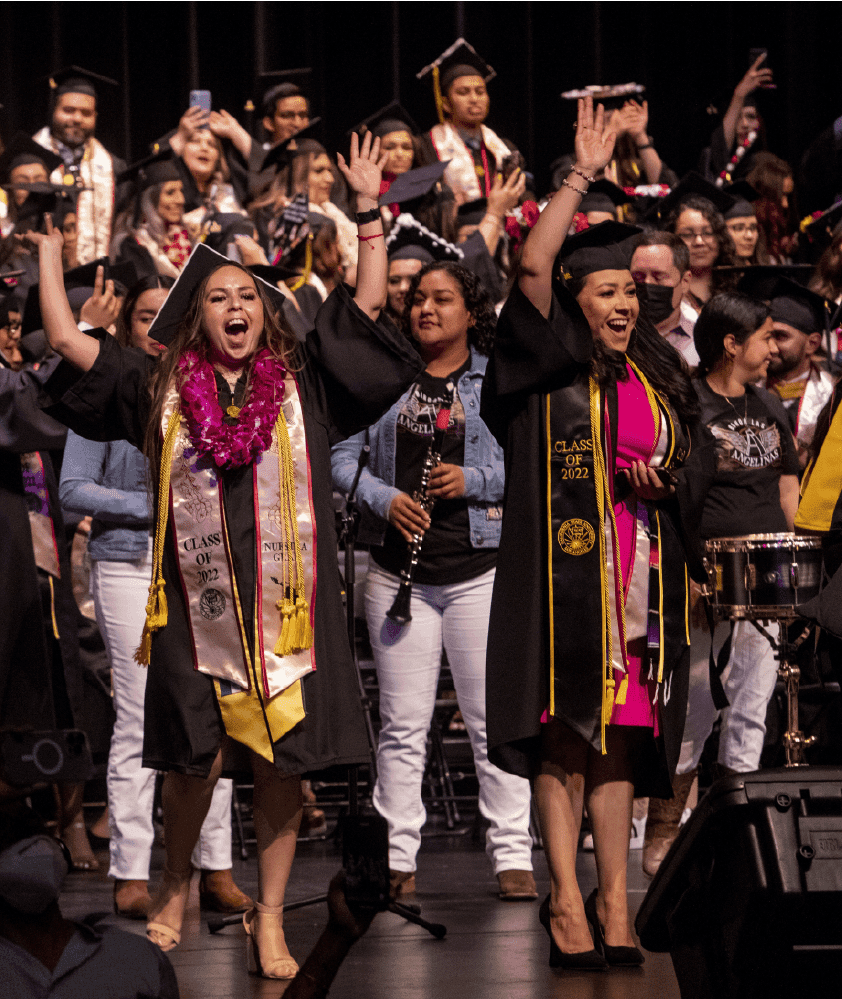
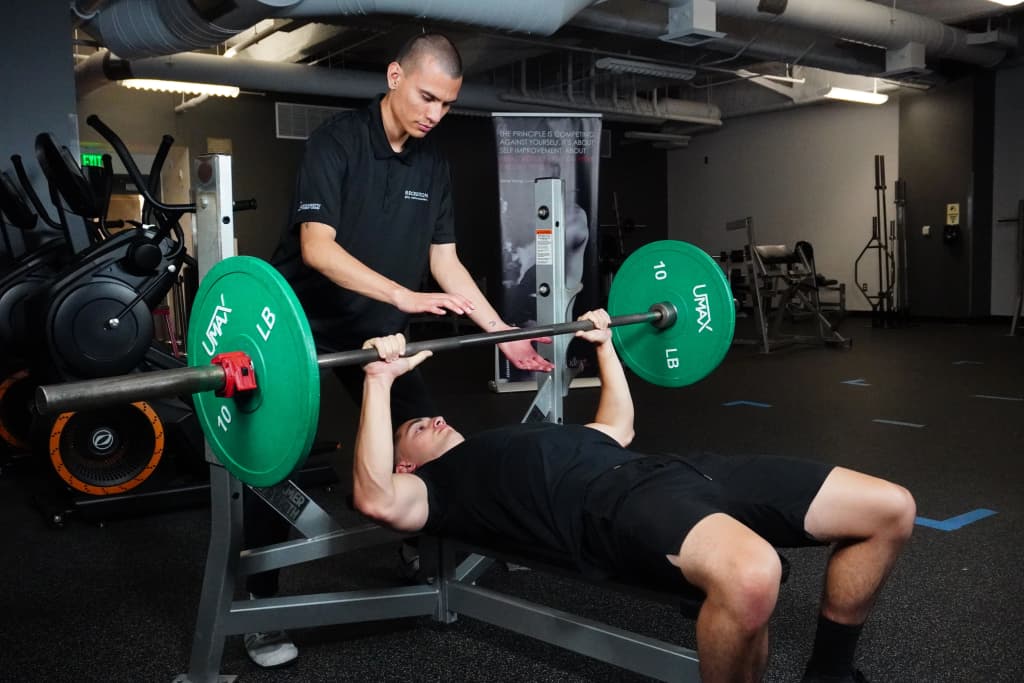
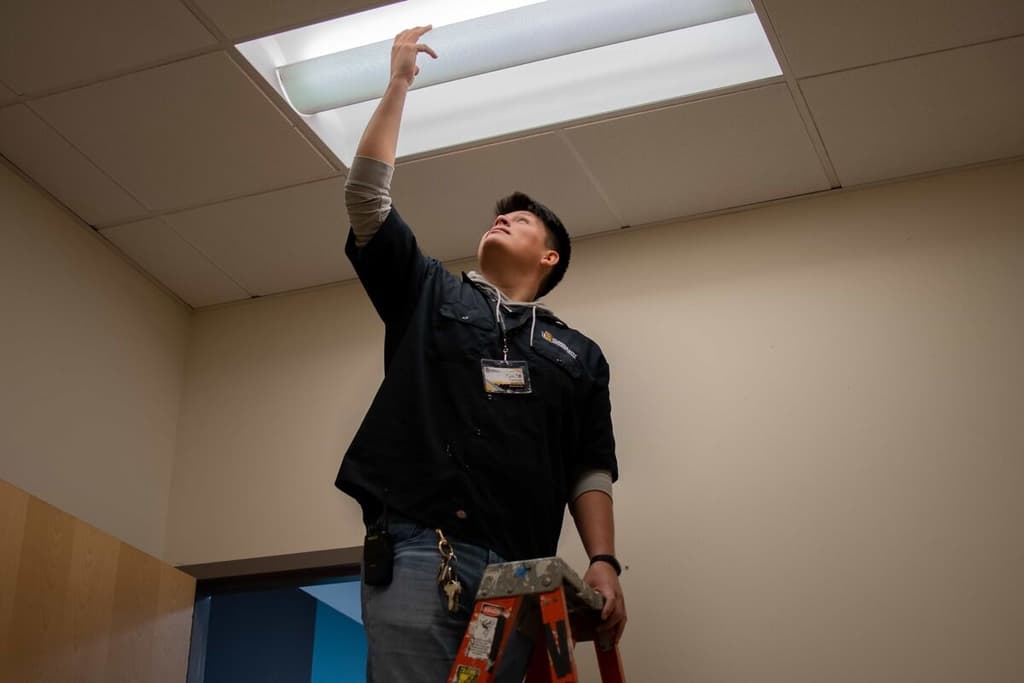
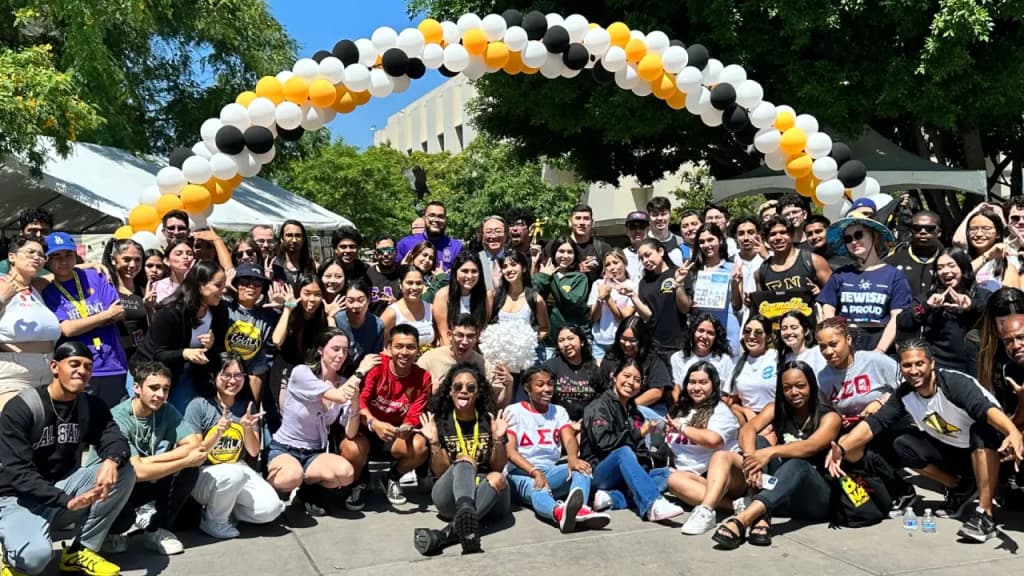
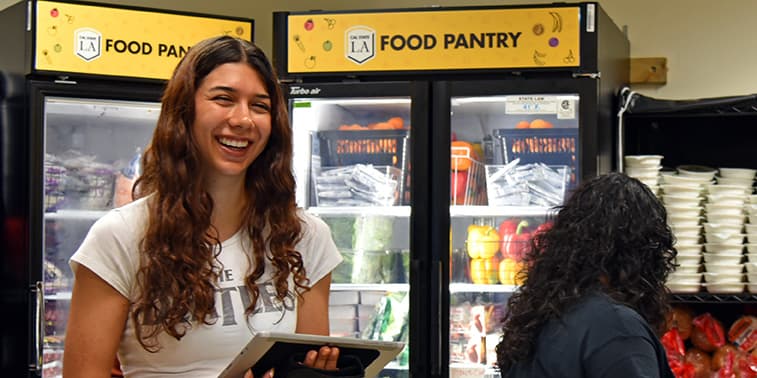
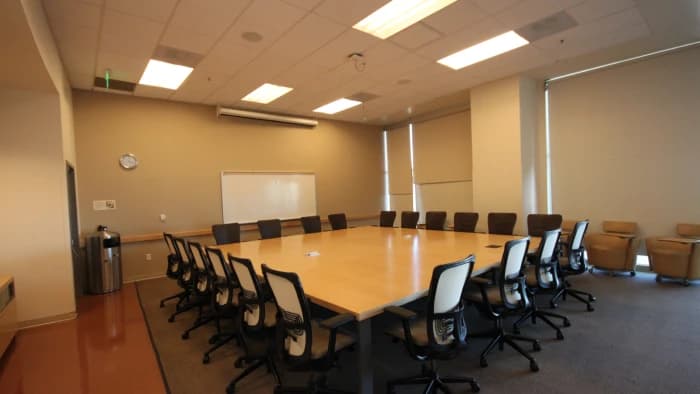
[PLACEHOLDER PHOTOGRAPHY — real U-SU event photography required before launch]
20072
The year students last approved a change to this fee. That vote paved the way for the new U-SU building to be built.
90–1004
Student employees: We are the largest student employer on campus, alongside 29 full-time staff.
54
Cultural graduation ceremonies a year, free to about 800 graduating students and their families.
The numbers
The new proposal is an increase of $90.00 which translates to $5.63 per week across a 16-week semester. The contract language also includes an annual inflation adjustment capped at 3%.2
As of August 2026, Cal State LA has the lowest student center fee of any CSU campus: $274.50 a year, a rate that hasn't changed since 2007.1

U-SU Fiscal Committee, “DO NOTHING” projection, April 10 20262
Plotted points are published figures. Revenue and expenses are published for FY 2025-26 and FY 2030-31 only, and the reserve for FY 2024-25, FY 2029-30 and FY 2030-31. The lines between them are trajectories, not year-by-year data.
Fiscal year | Revenue | Expenses | Reserve |
|---|---|---|---|
FY 2024-25 | Not published | Not published | $8,364,353 |
FY 2025-26 | $4,876,638 | $5,760,109 | Not published |
FY 2029-30 | Not published | Not published | $274,702 |
FY 2030-31 | $4,337,325 | $6,677,545 | −$2,065,518 |
Reserve, FY 2024-25
$8,364,353
Reserve, FY 2029-30
$274,702
Reserve, FY 2030-31
−$2,065,518
Figures are from the Fiscal Committee's April 10 2026 “DO NOTHING” projection: the model in which the fee stays at $137.25. $2,000,000 was cut across FY 2024-25 and FY 2025-26, 25% of the operating budget. An annual bond payment of about $1,920,000, roughly a third of the operating budget, runs through 2038.
Share of the U-SU operating budget, as of FY 2025-26
Bond payment on the building
33% · $44.60 of your fee
Chancellor's Office. Repays the loan that built the U-SU building, a fixed obligation that cannot be reduced or redirected.2
Supporting Services
43% · $59.69 of your fee
Admin, Operations, and Graffix. Keeps the building open and running: facilities, custodial work, utilities, repairs, staffing,and the in-house design studio.2
Programs
14% · $18.77 of your fee
Cross Cultural Center, Center for Student Involvement. Events, leadership development, cultural programming, and support for student organizations.2
Fitness & Game Room
9% · $12.84 of your fee
Recreation. Rec 1, 2, and the Game Room. Open to every student, plus the equipment and staff that keep it running2
Major Repair Replacement
1% · $1.35 of your fee
Operations. A reserve for big-ticket building repairs and equipment replacement, kept out of day-to-day spending.2
Total campus mandatory fees per year, 2025-26, across the CSU's 22 campuses1
CSU median $1,946
Value axis is capped at $3,000 for easier viewing. San Luis Obispo's true figure is $7,000 and its bar is drawn at the cap.
CSU median $1,946; mean $2,161. The median is used here because the mean is pulled up by a single outlier.1
22 campuses. The 2025-26 table lists 23; Maritime merged administratively with Cal Poly on July 1 2025 and moves to Cal Poly's fee structure in fall 2026.6
If the 2007 fee had only kept pace with inflation, it would be $215.30 a semester today.5 The proposal is $227.25; $11.95 more than inflation alone would explain. That difference is real, and it's there because catching up on inflation does not close a shortfall that's also driven by enrollment decline.3 Student fees currently cover 67% of what the U-SU costs to run; the sustainable range is 80–85%.2

What's at stake
Both outcomes are below: the spaces the U-SU has identified to add or convert if the fee passes, and what changes about the building and its services if it doesn't.

These are the spaces the U-SU has identified to add or convert. They are described here only as far as they have been described — nothing below is scheduled, costed, or final. [NEEDS COPY — timeline and phasing]
The lounge on the lower level, enhanced — more room to sit, study and wait out a gap in your schedule.
A room set up for productivity. [NEEDS COPY — what the engagement room is for]
The Game Room’s old second-floor space, renovated into an expanded lounge with computer resources. The Game Room itself has already moved to a larger space on the first floor.
An outdoor lounge on the second floor, planned with greenery in mind.
The current Sbarro space, converted into a pub.
A dedicated room for rest, with nap pods — findable, instead of tucked away on the third floor where they are now.
[AWAITING RENDERINGS — 6 spaces]
This section is the one place on the page where a picture would do more than a sentence. Nothing ships here until there is a real rendering or photograph of each space.
Get informed
Three ways to check any of this for yourself: read the budget the figures come from, bring your questions to an info session, or take them to the board directly.

The April 10 2026 Fiscal Committee presentation is the source for every budget figure on this page.
Open sessions in the U-SU where you can ask staff and board members directly.
The U-SU Board of Directors is chaired by elected students and its meetings are open for anyone to join.
Fee proposals move through the CSUs regularly. Here are some recent ones:
Campus | Decided | Proposal | Outcome |
|---|---|---|---|
 | April 2024 | $265/semester for a new recreation center, charged starting a year before it opened | |
| October 2024 | Same facility, reduced to $245/semester, not charged until the year it opens | |
 | Fall 2025 | Instructionally Related Activities fee increase | |
 | Spring 2026 | New athletics fee | |
 | [NEEDS FIGURE — date] | Category II fees indexed to HEPI, capped at 4% annually |
San Marcos is the one worth understanding: students rejected the first proposal, partly because it would have charged them a year before the building opened. The campus came back with a cheaper proposal on different terms, and students approved it.
That's what participation does. You have the power to change what gets proposed.
[AWAITING REAL QUOTES — 4 needed, with written consent]
The TestimonialCard grid renders from an empty array. The four quotes in v1 were invented and have been removed. Nothing ships here without a named student and a signed release. Each card reserves a slot for the student's portrait; the photograph needs the same release as the quote.
[SAMPLE LAYOUT — placeholder cards, not student quotes]
[SAMPLE — one long quote, about three lines, where a student says which part of the building they use and what they would do without it. Sets the tallest card in the row.]
[Student name]
[Major] · [Class year]
[SAMPLE — one short quote, a single sentence. Shows how the grid handles an uneven row.]
[Student name]
[Major] · [Class year]
[SAMPLE — a medium quote of two lines, from a student employee, about the job rather than the space.]
[Student name]
[Position] · [Class year]
[SAMPLE — a medium quote of two lines, from a commuter student, about the hours between classes.]
[Student name]
[Major] · [Class year]
$90 more per semester. Your U-SU fee goes from $137.25 to $227.25 a semester: $454.50 a year instead of $274.50. Across a 16-week semester that is $5.63 a week. The effective term has not been set. [NEEDS FIGURE — effective term]
That answer belongs to Cal State LA Financial Aid, not to the U-SU, and we are not going to approximate it. It will be published here, in their words, before anything else on this page is finalized. Until then: Cal State LA Financial Aid. [NEEDS COPY — Financial Aid]
No. The proposed contract language allows the fee to rise by up to 3% a year for inflation. It is a ceiling, not a target, and it sits below the historical average rate of inflation, which is exactly why this page exists: the fee was set in 2007 and has not moved in nineteen years. The adjustment is there so that the U-SU never has to come back and ask for another $90 at once.
The U-SU is a separate 501(c)(3) nonprofit governed by a board chaired by an elected student. It is not part of the university's operating budget and tuition does not fund it. Student fees cover 67% of what it costs to run today; the sustainable range is 80–85%.
$2,000,000 has already been cut across FY 2024-25 and FY 2025-26 — 25% of the operating budget. On the current fee, the reserve falls from $8,364,353 in FY 2024-25 to $274,702 in FY 2029-30 and to −$2,065,518 in FY 2030-31. What gets reduced after that has not been decided. See the full section →
The U-SU Board of Directors, chaired by an elected student, working from the Fiscal Committee's April 10 2026 budget projection. [NEEDS COPY — board resolution and vote record]
Fair question, and the honest answer has two halves. The first: most of what is in here costs money everywhere else — a gym, a pantry, a microwave, a quiet room, a place to park yourself between classes — and here it is already paid for. The second: the building went up in 2009 on a bond that runs through 2038, about a third of the operating budget every year. That payment does not stop if attendance drops. It is worth getting something back for it.
Every figure on this page is numbered and traced to its document. Sources →
For faculty & staff
90–100 student positions and 29 full-time staff. Many of your students are paid by this building.
93,000 sq ft, opened in 2009: meeting rooms, event space and the ballroom, bookable through U-SU Operations.
$137.25 a semester today, $227.25 proposed, last set in 2007. Every figure here is documented below.
CSU campus mandatory fees table, 2025-26
Fee comparison, median and mean, campus rankings, and the student center fee figures.
U-SU Board of Directors Minutes, March 20, 2026
Fiscal Committee recommendation for a $75 increase, amended to $90 and passed by a majority of the board.
Cal State LA institutional Fact Book
Enrollment trend and student demographics.
U-SU operating budget / annual report
Staffing, student employment, building size, services expense reports
CSU Chancellor's Office, Cal Poly–Maritime integration
Administrative merger effective July 1 2025, academic integration in fall 2026.
Cal State San Marcos referendum results, 2024
Both referendum votes on the recreation facility fee: the April rejection and the October approval on revised terms.
SDSU Campus Fee Advisory Committee, Fall 2025 alternative consultation
The alternative-consultation process for the Instructionally Related Activities fee, overseen by a student-majority committee.
Cal State East Bay presidential message on proposed athletics fee, April 2026
The proposed athletics fee and the alternative consultation still under way.
CSUSB Student Financial Services, Category II fee adjustment
Category II fees indexed to HEPI with a 4% annual cap, and the 2025-26 adjustment.
Get involved!
You've seen the U-SU budget, the shortfall, and what $90 more a semester will get you. Now is the time to act. Every piece of feedback is a vote for your vision of a better campus.
Prototype for review — not a published U-SU communication. This page describes a shape that has not been finalized. Items marked [NEEDS FIGURE], [NEEDS COPY] or [NEEDS LINK] are unresolved and must be confirmed before launch; photography is placeholder.